Reviews
Wild Canopy Dash succeeds by keeping its design simple and focused. The single-input control is responsive, and the escalating speed creates genuine tension without feeling unfair. The forest environments are colorful and varied, with each new section introducing fresh hazards that keep the gameplay from growing stale. The checkpoint system reduces frustration, allowing players to learn patterns through repetition. While the game does not offer deep mechanics or a story, it delivers exactly what it promises: a tight, family-friendly obstacle runner that rewards practice and quick thinking.
Description
Core Movement & Control
Wild Canopy Dash uses a single input method to control the explorer's movement. Players tap or press a key to make the character jump or change lanes, depending on the section. This simple control scheme allows anyone to start playing immediately, but mastering the timing required to avoid obstacles takes practice. The game does not require complex button combinations or memorized sequences, making it accessible for younger players and those new to action games.
Environment & Hazards
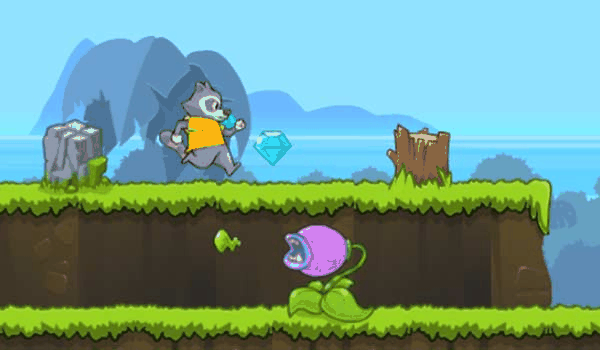
The forest setting is filled with interactive elements that change as you progress. Early sections feature stationary plants that block the path, while later areas introduce moving obstacles such as swinging vines and rolling logs. Some creatures in the environment may drop objects from above, requiring you to watch both the ground and the canopy. The visual design keeps each area distinct, with color-coded backgrounds and varied plant life that signal shifts in difficulty.
Score & Progression
Collecting gems along the route increases your final score and unlocks new areas of the forest. Each gem gathered adds to a multiplier that boosts points from subsequent collections. If you hit an obstacle, you lose a life and restart from a nearby checkpoint. The game tracks your best score, encouraging repeated attempts to improve. There are no in-game purchases or advertisements that interrupt play, keeping the focus on the action.
Pacing & Difficulty Curve
The game gradually increases its speed and obstacle density as you travel further. Early sections allow you to learn the basic rhythm, while later stages require faster decisions and more precise timing. The difficulty curve is smooth, meaning you rarely face an impossible challenge without warning. This design helps build player skill naturally, making each successful run feel earned. The experience is short enough for quick sessions but offers enough variety to keep you coming back.









03 Comments
Sign in to comment
You must be logged in before posting a review or rating.
No account? Create one
No comments yet. Be the first to comment!